2020-08-08

On August 5, 2019 Indian PM Narendra Modi made the world more dangerous with his lunacy in Kashmir, a year later things are worse

By Fareed Khan

A year ago this week the world became a more dangerous place, caused by India's actons India did in the autonomous Muslim majority state of Kashmir, at least the part that it controls.  On that day Indian Prime Minister Narendra Modi stripped the state of its legal and constitutional autonomy, and through his actions said to Kashmiris that they had no say in the way they were to be governed.  The actions elicited outrage from Pakistani Prime Minister Imran Khan and from protesters the streets across the country.

For more than 70 years Kashmir has been a flashpointvI for India and Pakistan.  It is a conflict that has largely been ignored by the rest of the world, except occasionally when the conflict flares up and it catches the world’s attention.

Canadian journalist and author Eric Margolis said in his 2002 book War At the Top of the World, that Kashmir is the most dangerous region in the world, and that if nuclear war war was going to break out anywhere in it would be in Kashmir between India and Pakistan.  Both nations have tactical nuclear weapons in the region pointed at each other, meaning if a nuclear exchange were to happen people on both sides of the line of control would have little warning.

On August 5, 2019 Narendra Modi’s fascist BJP government poured gasoline on the fire in Kashmir when it unilaterally rescinded Article 370 and 35A of the Indian Constitution, thereby revoking the sovereignty of a people who never accepted Indian control of their nation in the first place.

These two provisions were the foundations on which Kashmir acceded to join India after colonial India was partitioned by the British, and it gave Kashmir’s legislative assembly the power to define who were "permanent residents" of the state.  As the only Muslim majority state in India these two constitutional provisions were key to preserving the identity and culture of the Kashmiri people.

The decision by the Modi government was labelled as illegal because it was done unilaterally without consultations with the state government of Kashmir.  In addition, it was illegal under Indian law which requires more than just executive authority to change the Indian constitution.  Along with these unprecedented actions India also imprisoned the leaders of Kashmir without charge, disarmed the state's security forces and police, imposed a communications lock down of the state's phone system, internet and social media, instituted a state-wide curfew thereby making Kashmiris prisoners in their own homes, and started arresting Muslim activists and politicians.  In addition, there have been reports of Indian security forces torturing Kashmiris who have been imprisoned for many years, something which is likely to continue as India increases its stranglehold on the Muslim majority state. 
 
A year later, there are approximately 600,000 Indian soldiers and security personnel in Kashmir to control the population of 12 million Kashmiris.  That is a ratio of one soldier for every 20 civilians, and it describes what is a defacto police state in Kashmir where human rights don’t exist, where people are arbitrarily arrested and disappeared, and where torture of prisoners is routine.  These are clearly the actions of a repressive, criminal government that cares little about the welfare of Kashmiri Muslims despite what Modi has said about wanting to improve the lives and economic opportunities of everyone in Kashmir. 
 
What Modi did ishould not be surprising given the record of his government and its campaign of persecuting and brutality targeting India’s Muslims since he first came to power.  In truth, what he did was an exercise in authoritarian power and demonstrated that democracy and the rule of law in India is now a complete sham as demonstrated by the escalation of state violence and terror against India’s only Muslim majority state. 
 
But Modi’s actions shouldn’t be surprising given the history of India’s occupation of Kashmir, and the brutality they have inflicted on the Muslim population of that region for many decades.  This decision was the culmination of seven decades of oppression, persecution and political manipulation by India.  It was also another slap to the face of the United Nations which has passed multiple resolutions concerning Kashmir, including Security Council Resolution 47 which was adopted on April 21, 1948 and called for the Kashmiris to determine their own future in a plebiscite. 
By undertaking this action India has set the stage for creating facts on the ground in Kashmir that will make it near impossible for Kashmiris to determine their own future short of some type of outside intervention to force a peaceful solution.  The strategy that India has adopted is in fact very similar to what Israel has been doing to the Palestinians for over 70 years, and it isn’t surprising given the close ties that have developed between the fascist governments in India and Israel since Modi became prime minister. 
 
However, there may be a small avenue of hope to put pressure the Indian government, and it lies in the hands of those that choose to invest in justice for the people of Kashmir.  That hope lies in the UN’s Genocide Convention, to which both Pakistan and India are state parties.  Pakistan or any other nation could use this seminal UN treaty to bring India before the International Court of Justice in The Hague.  If successfully prosecuted a case under the Genocide Convention would not only shame India and force it pay reparations to Kashmir, it could also force India to allow Kashmiris to determine their own future, as India agreed to do in 1948 under Security Council Resolution 47. 
 
Under Article 2 of the Genocide Convention “genocide” is defined as any of the following acts committed with intent to destroy, in whole or in part, a national, ethnic, racial or religious group.  An offending party need only commit one of the following acts to be guilty of committing genocide.  These acts include: 
(a)  Killing members of the group; 
(b)  Causing serious bodily or mental harm to members of the group; 
(c)  Deliberately inflicting on the group conditions of life calculated to bring about its physical 
         destruction in whole or in part; 
(d)  Imposing measures intended to prevent births within the group; and 
(e)  Forcibly transferring children of the group to another group.

The likelihood of genocide occurring was so high that the organization Genocide Watch issued an urgent alert, warning of the potential for genocide in Kashmir in the days that followed India's rescinding of Articles 370 and 35A, while some human rights scholars and jurists argue that India’s actions already constitute genocide under Articles 2a, 2b, and 2c of the Genocide Convention. If political will were mustered, any state party to the Convention could file a motion to hold India accountable, signalling a critical opportunity to address the ongoing crisis.

A military resolution to the Kashmir dispute is unthinkable, as even conservative estimates suggest that a conflict between India and Pakistan could spiral into a nuclear exchange, killing over 20 million people instantly and potentially claiming up to 125 million lives globally in the ensuing nuclear winter. The catastrophic stakes demand that both nations abandon militarized approaches, as the cost of such a confrontation would be apocalyptic for the region and the world.
 
For over seven decades, India’s actions in Kashmir—marked by violations of UN Security Council resolutions, the Universal Declaration of Human Rights, and the Geneva Conventions—have perpetuated a cycle of suffering and injustice. During that time the Kashmiri people have endured relentless oppression, their voices silenced, and their rights trampled. A new path, grounded in the legal framework of the Genocide Convention, offers hope for accountability and change. The world cannot continue to stand by as Kashmiris suffer.  Urgent, decisive action is needed to restore their human rights and secure a future of peace, justice, and dignity for a people too long ignored and forgotten.

© 2020 The View From Here.  © 2020 Fareed Khan.  All Rights Reserved.

2020-08-07

On 75th anniversary of A-bomb attacks on Japan we must accept that racism played role in US choice of Japan over Germany as first target

By Fareed Khan 

August 6th and 9th marks the 75th anniversary of the United States committing the single worst act of racist state terrorism in history.  These are the dates in 1945 when the US dropped atomic bombs on the Japanese cities of Hiroshima and Nagasaki.  The US justified the use of atomic weapons as the quickest way to end the war with Japan without incurring thousands of American casualties to conquer the Japanese homeland.  However, this was not the view held by US military leaders, and President Harry Truman’s military advisors were ultimately overruled by Truman’s political advisors about using the A-bomb against Japan.The two bombings collectively killed 225,000 people immediately and in the days and weeks that followed, as well as an additional 200,000 more people by 1950.  These numbers don’t include the tens of thousands who lived with lifelong physical injuries and cancers resulting from radiation exposure that eventually took their lives in subsequent decades.
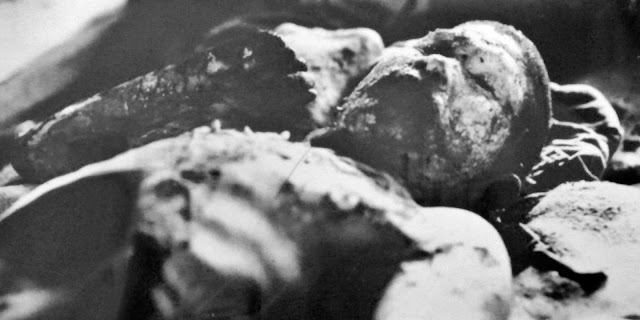
The decision to target Japan rather than Germany was made on September 18, 1944, a time when the war in Europe was still raging.  No one at the time could predict that by the spring of 1945 Nazi Germany would surrender and the war in Europe would be over.  Therefore it begs the question why only Japanese targets were selected rather than targets in Germany for the first use of these new weapons. 

 
The overwhelming majority of citizens of Hiroshima and Nagasaki were women, children and the elderly, not involved in any way in the Japanese military.  This alone should raise questions about the rationale and justification put forth by advocates of using America’s ultimate weapon against targets that were essentially defenceless and without any significant military value.
 
The answer lies in the dehumanization of the Japanese as part of US war propaganda, and the virulent racism targeting all things Japanese.  By the time the summer of 1945 arrived the US government had spent three and a half years putting out racist anti-Japanese propaganda to instill a sense of nationalism in all Americans to support the war effort.  The fact that this propaganda portrayed the Japanese as a sub-human society without a sense of humanity resulted in Japanese Americans (who had no real ties to Japan) being stripped of their property and possessions and imprisoned in American concentration camps after the Japanese attack on Pearl Harbour.
Despite this racist propaganda, many U.S. politicians, scientists and military experts came forward in the months and weeks before the bombs were dropped to state that the war could be ended quickly without the use of the atomic bombs.  Admiral William Leahy, President Truman’s Chief of Staff, wrote in his 1950 memoir I Was There that, “The use of this barbarous weapon at Hiroshima and Nagasaki was of no material assistance in our war against Japan. The Japanese were already defeated and ready to surrender . . . in being the first to use it, we . . . adopted an ethical standard common to the barbarians of the Dark Ages. I was not taught to make war in that fashion, and wars cannot be won by destroying women and children.”
 
Others who counselled President Truman against dropping the atomic weapons on Japan included: General Dwight Eisenhower, Supreme Allied Commander in Europe; General Douglas MacArthur, Supreme Allied Commander in the Pacific; General Curtis LeMay, future head of the U.S. Air Force; Navy Secretary James Forrestal; former President Herbert Hoover; Albert Einstein; and some of the lead scientists of the Manhattan Project.
 
In a visit to President Truman a couple of weeks before the bombing, General Dwight D. Eisenhower urged him not to use the atomic bombs given that the Japanese had indicated they were willing to surrender. In a 1963 interview in Newsweek Eisenhower said,“It wasn’t necessary to hit them with that awful thing . . . to use the atomic bomb, to kill and terrorize civilians, without even attempting [negotiations], was a double crime.” 
 
War is state terrorism on an epic scale but the perpetrators rarely if ever see the inside of a court or are convicted for their crimes. In this instance it was American state terrorism fuelled by a virulent racist hatred towards the enemy, that resulted in the US imprisoning tens of thousands of its own citizens for the mere fact that they shared the Japanese ancestry of their enemy, and justifying the nuclear incineration of two Japanese cities which ultimately resulted in more than 400,000 civilian deaths by weapons of mass destruction. 
World War 2 was an act of terrorism initiated by Nazi Germany but involving most of the nations of the world. The decisions by both the Allies and the Axis powers to target civilians in their military strategy were criminal acts of terrorism, war crimes, crimes against humanity, and violations of the 1899 and 1907 Hague Conventions, and the 1925 Geneva Protocol.  America's decision to target Hiroshima and Nagasaki with their atomic bombs, where the majority of victims were civilians, were not only violations of these treaties but were in effect acts of state terrorism.
 
History is written by the victors in that the most egregious and criminal acts of the victor nations are rarely if ever brought to light or prosecuted.  The US and its World War 2 allies wrote the history of the atomic attacks on Japan to put the US in the most positive light. However, anyone who seeks the truth will discover that nations that create empires build those empires on the bodies of the innocent, and on foundations infused with lies to hide their war crimes. 
 
The reality is that US President Harry Truman, who had the final say on going ahead with the attacks on Hiroshima and Nagasaki, was a racist war criminal and should be remembered as such.  He was the leader of a terrorist state which chose to target its non-white enemy (Japan) rather than its white enemy (Nazi Germany) when the decision was being made on where to use America’s new weapon.  He chose targets that were civilian, primarily populated with women and children, and he pushed forward with the attacks despite the advice of his most senior military advisors, and many prominent Americans and senior statesmen. 
 
Of all the nations on Earth, the US is the Dr. Jekyll and Mr. Hyde of the world. On the one hand it holds itself up as the beacon of democracy, human rights and freedom, and on the other hand it undermines democracy, violently violates human rights, and destroys the freedom of people in other nations in support of its own political or economic interests, or if foreign governments dare to challenge the US. For modern examples all you have to do is look at Iraq, Afghanistan, Iran, and Venezuela. 
 
It seems that if you are not an ally or friend of the US, the only way to keep them from interfering in your nation's business or violating your sovereignty is to do like North Korea and build your own nuclear weapons – the very weapons that made the US a terrorist state in the first place. 
 
The US is the only nation in the world that has used nuclear weapons against an adversary.  It did so because its president was a virulent racist, who accepted America’s racist propaganda which had dehumanized all Japanese into caricatures that were sub-human ogres without a shred of civility or humanity.  This made it easier to move forward with the plan to bomb Hiroshima and Nagasaki despite the better judgment of his military leaders, who believed that the surrender of Japan could be achieved without targeting women and children.  The fact that Truman went ahead with the plan says much about him as a person, and about the racist mindset of the political advisors that surrounded him who encouraged him to do so.
 
As the world marks the 75th anniversary of the nuclear attacks by the US on Hiroshima and Nagasaki, let us never forget the racist mass murder committed on these two days.  Ultimately it was hate that won day when thousands of Japanese civilians in those two cities were incinerated in the 6000°C fireball created when the bombs exploded.  Let us hope that no nation that possesses nuclear weapons ever gives in to such hate again, and for the sake of humanity let us hope we live to see the day when nuclear weapons are eliminated from the Earth.
 
© 2020 The View From Here.  © 2020 Fareed Khan.  All Rights Reserved.


2020-07-11

White privilege on display in RCMP handling of Rideau Hall security breach


After driving from Manitoba in his pickup truck, Corey Hurren, a white man in his 40s, arrived at Rideau Hall in Ottawa on July 2nd, where he used his vehicle as a battering ram to break through the RCMP police check point at the gates of the property where the Prime Minister and the Governor General live, in order to (allegedly) harm or kill Prime Minister Justin Trudeau.  Following Hurren's arrest it was confirmed by the RCMP that he was in possession of multiple firearms, including a handgun, and that his arrest occurred without Hurren being physically harmed after RCMP officers spent more than 90 minutes talking him down.


Contrast the RCMP handling of a heavily armed and dangerous intruder near the residences of Canada’s top two government officials and its outcome with the way that they and other police forces across the country have handled encounters with Black, Indigenous and people of colour (BIPOC).  This year alone, on eight occasions, Indigenous, Black and Brown Canadians have been shot and killed by police, and none were in possession of a firearm at the time they died.

To BIPOC communities the difference between how Hurren was treated and how they are treated is a clear illustration of white privilege and racism in policing.  Nothing else could explain why police were willing to take greater care and patience dealing with a heavily armed white man bent on violence against the PM than they do when dealing with unarmed Indigenous and racialized individuals.

Since the beginning of 2020 there have been 11 documented cases of police shootings resulting in the death of civilians. In June alone there were three instances where Indigenous people and a person of colour were shot by police.  Neither Chantal Moore, Rodney Levi, nor Ejaz Choudry were in possession of firearms and yet the police used deadly force, while Hurren was heavily armed and police dealt with him without firing a shot.

Since the killing of George Floyd by a Minneapolis police officer in May, police forces in Canada have been under intense scrutiny for their use of force in encounters with BIPOC.  According to an analysis conducted by CTV and released in June, of the last 100 people killed by police dating back to January 2017, 38 percent of the shooting victims were Indigenous and 9 percent were Black, even though they represented 5 percent and 3 percent of the population respectively.  The fact that the number of non-white victims of police shootings are disproportionately higher than their numbers in the general population is not a new revelation.  But when examining police-civilian encounters in Canada, the security incident at Rideau Hall implies if not clearly illustrates the presence of white privilege and racial discrimination in policing in a way that statistics cannot.

It is apparent from the history of police encounters with civilians, that individuals who are BIPOC more frequently face violence and a violation of their rights at the hands of police than do white people.  For years academics, researchers and activists have been saying it is because of racism embedded in police culture.  What else would explain the way a heavily armed white intruder who violently breached the perimeter of Rideau Hall was treated, and it begs the question what would have been the outcome if he had been Indigenous or Black or Muslim?

The Rideau Hall incident has strengthened calls for a comprehensive restructuring and review of how policing is done to eliminate an apparent culture of white privilege and racism under which police seem to operate.  In addition, activists are demanding that significant resources be shifted from policing to programs that deal with social problems in the community that could lead to individuals facing off against police (with deadly results).

If demonstrations across the country are any indication, Canadians are unwilling to continue with policing as usual.  The disproportionate police shootings and violent encounters between police and BIPOC needs to stop.  The image of how police treated Hurren, compared to those who are BIPOC, will fuel even more anger towards police if reforms aren’t undertaken and if issues of racism in policing aren’t addressed.  We must heed calls for police reform, and the work needs to begin now.

© 2020 The View From Here.  © 2020 Fareed Khan.  All Rights Reserved.